Accessiblity Auditing of Website for Angle Studios and Scrummi
Project Details
Client: European digital service
Service: Website Accessibility Audit
Standard: WCAG 2.2 Level AA
Project partners: Angle Studio and Scrummi
Angle Studio wanted to help its client understand its digital accessibility responsibilities and the improvements needed across its website.
The project combined accessibility auditing, inclusive design thinking and technical guidance to help move identified issues from audit to design and implementation.
Quick Overview
A WCAG 2.2 Level AA accessibility audit was completed for a European digital service in partnership with Angle Studio and Scrummi.
The review examined barriers affecting people who use keyboards, screen readers, magnification and other assistive technologies. Testing covered navigation, colour contrast, forms, headings, focus visibility, zoom, responsive reflow and cognitive accessibility.
The client received a structured findings report with screenshots, plain-English explanations, WCAG references, technical remediation guidance and a prioritised improvement roadmap.
By connecting the audit with design and development support, the project gave the client clear, practical actions for creating a more accessible and inclusive digital service.
Project Overview
Understanding the challenge
Websites can appear visually polished while still creating significant barriers for disabled users.
The review considered people who:
Navigate using a keyboard
Use screen-reading software
Enlarge or zoom content
Require sufficient colour contrast
Benefit from clearly labelled forms
Experience visual, motor, cognitive or neurodivergent barriers
The objective was to identify these barriers and provide clear, achievable guidance for improving the website.
Developing the approach
A structured accessibility audit was carried out against WCAG 2.2 Level AA.
Testing included:
Keyboard-only navigation
Screen-reader compatibility
Colour contrast analysis
Zoom and responsive reflow testing
Form labels, instructions and error messages
Headings, links and page structure
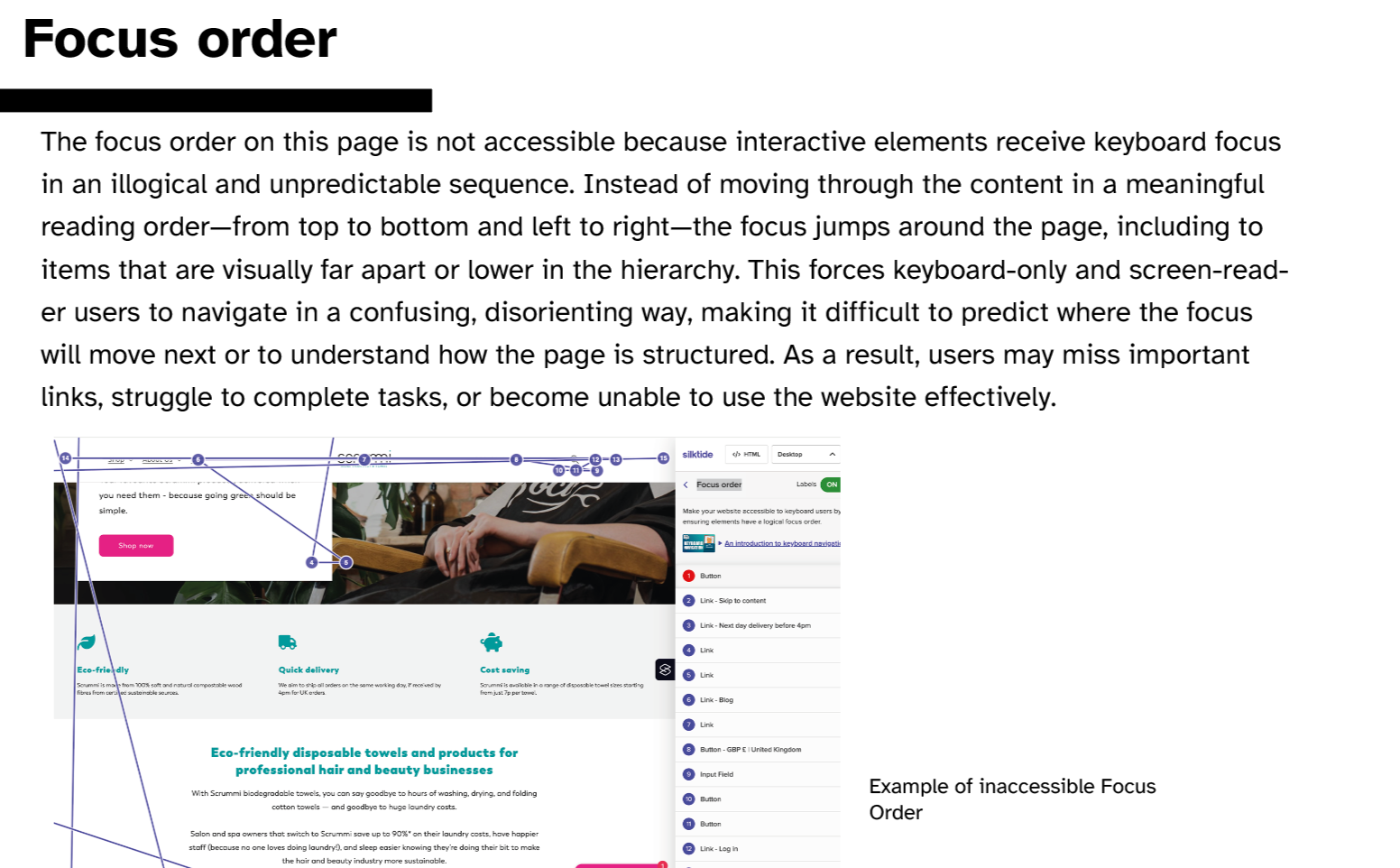
Focus visibility and navigation order
General usability and cognitive accessibility
The approach combined technical assessment with practical consideration of how disabled people would experience the service.
The Findings
Showing the barriers
The audit identified issues including:
Navigation that was difficult to operate using a keyboard
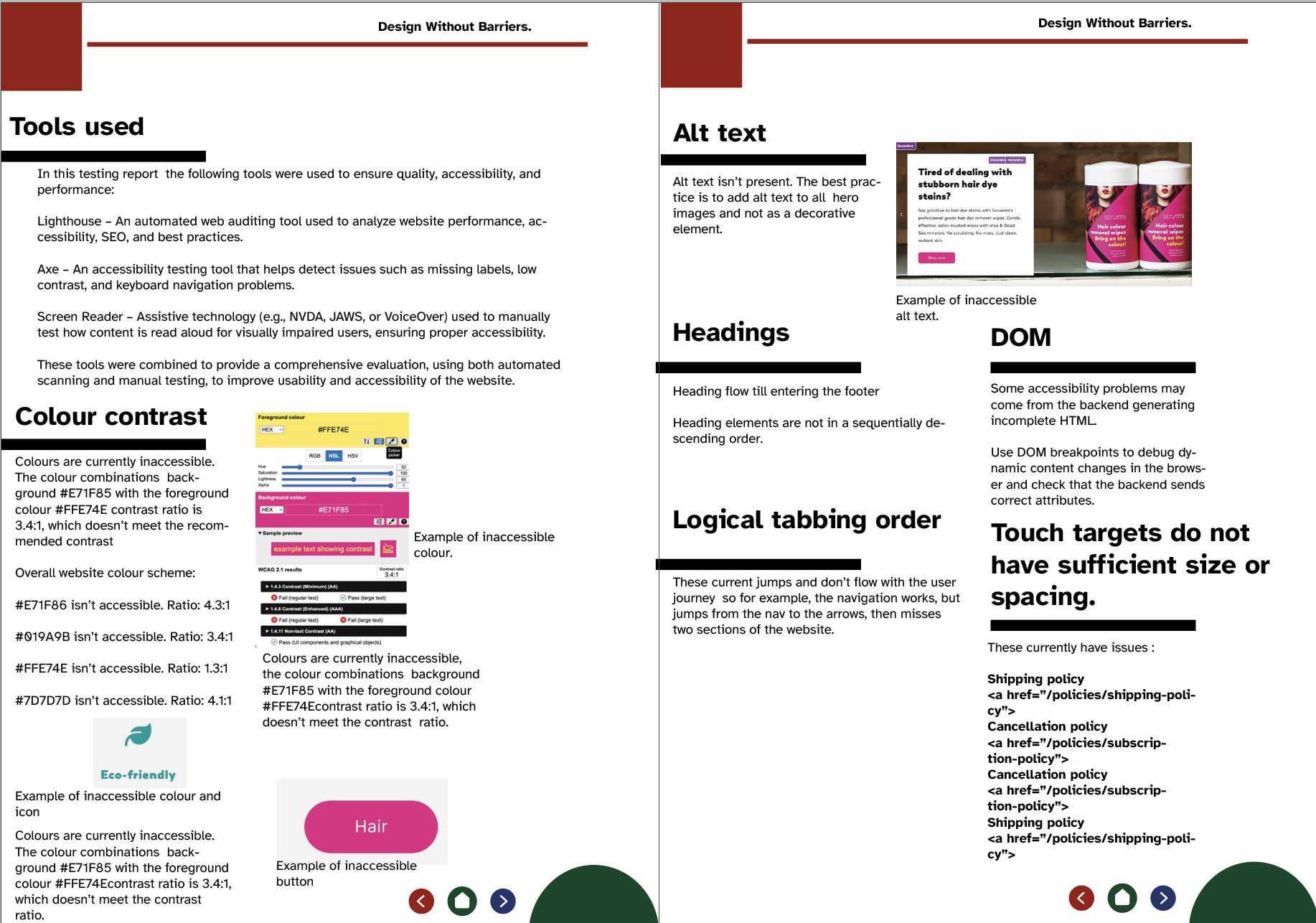
Insufficient colour contrast in some interface elements
Form fields that were not clearly labelled for screen-reader users
Content and controls becoming difficult to use at higher zoom levels
Each issue was supported by:
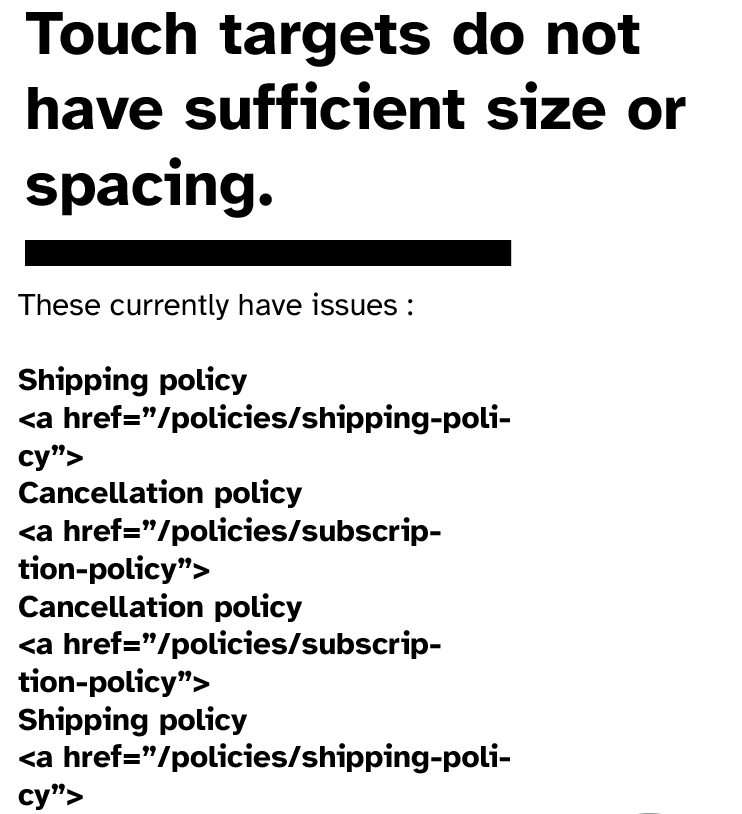
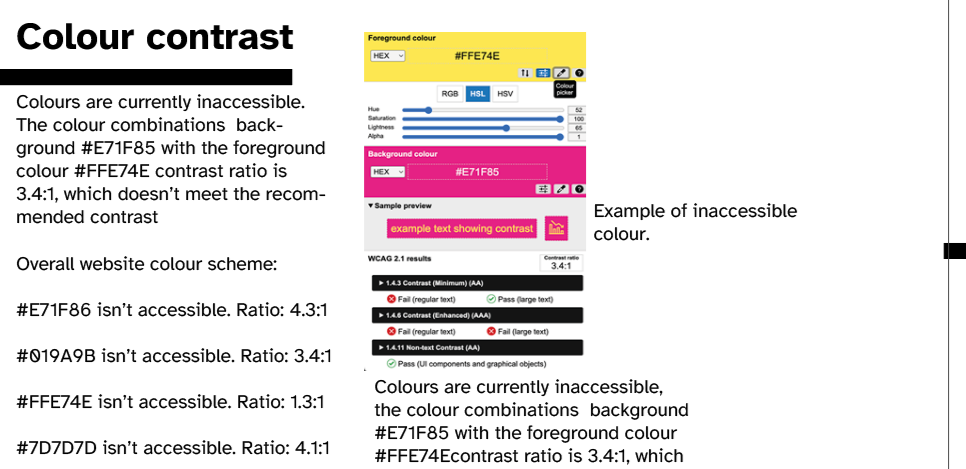
Screenshots demonstrating the barrier
Plain-English explanations
Relevant WCAG references
Examples of the potential effect on users
Practical recommendations for improvement
This enabled the client to understand both the technical issue and its real-world impact.
Turning findings into improvements
The findings were prioritised according to their severity and effect on users.
Following the audit:
Inclusive design recommendations were explored with Angle Studio.
Technical remediation guidance was provided to support implementation with Scrummi.
Urgent barriers and achievable improvements were clearly identified.
Longer-term recommendations were provided to support more accessible digital development.
This collaborative approach connected accessibility auditing with the design and development process.
The final Outcome
Delivering the outcome
The organisation received:
✔ A structured accessibility findings report
✔ WCAG-aligned identification of issues
✔ Screenshots demonstrating accessibility barriers
✔ Practical recommendations for designers and developers
✔ Technical remediation guidance
✔ A prioritised accessibility improvement roadmap
The audit gave the client a clear understanding of the barriers within its website and the actions required to create a more inclusive and usable digital service.
Why accessibility testing matters
Accessibility testing helps organisations:
Identify barriers affecting disabled people
Improve usability for a wider audience
Work towards recognised accessibility standards
Understand and prioritise necessary improvements
Build accessibility into future design and development
Strengthen inclusive digital services
Client's kind words:
“I wanted to advise a client on their accessibility responsibilities, as they operate in Europe and needed to be compliant. I spoke to Harrison and, after an initial discussion, the report was fantastic.
He audited our client’s website and provided a detailed analysis, which enabled our client to understand the necessary actions fully. Harrison is unique compared to other experts as he lives and breathes accessibility, plus he’s an all-round great guy—nothing is too much trouble.”
—Ryan Grist, Angle Studio Owner